Pratonton
menu
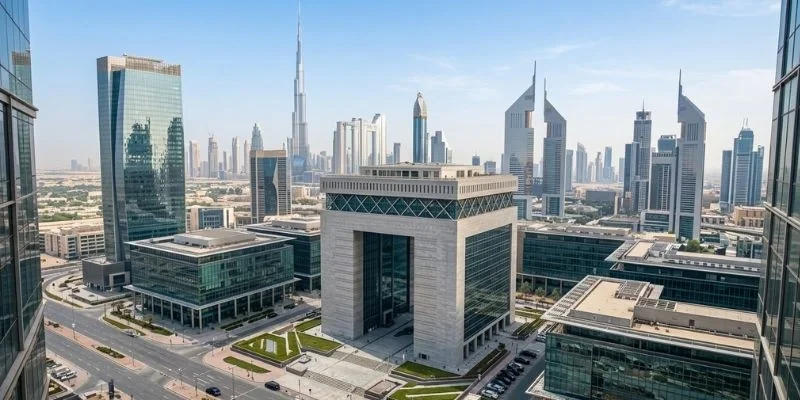
On the morning of March 13, 2026 (local time), an incident occurred near the Dubai International Financial Centre (DIFC)—the economic heart of the United Arab Emirates (UAE)—where a projectile, presumed to be a drone, was intercepted.
This event transcends a mere military skirmish, signaling a profound shift in the status of Dubai, which has long been regarded as a "safe haven" for global elites. In today's post, we analyze the risks facing Dubai as a financial hub, based on the latest breaking news.
According to foreign media reports and official statements from the Dubai Media Office, debris from an intercepted projectile struck the exterior of a building in the central district during the UAE defense system's engagement.
 - Physical Damage: Fortunately, no casualties have been reported. However, the explosions were powerful enough to shake entire buildings, and plumes of black smoke were seen rising over the skyline.

 - Symbolic Blow: The fact that such an incident occurred in the middle of DIFC—ranked among the world’s top 10 financial hubs—has delivered a significant psychological shock to the global corporations and financial professionals stationed there.
The repercussions of the Middle East conflict over the past two weeks have laid bare the vulnerabilities of Dubai’s demographic structure. With over 90% of its population consisting of foreign nationals, Dubai is a unique city that thrives only as long as the conditions of "safety" and "tax benefits" are met.
 - The Limits of "Liquid Citizenship: Major international outlets, including The Guardian, have reported a "ghost town" phenomenon, where the "billionaire’s playground" is rapidly emptying due to the saturation campaigns that began late last month.

 - Erosion of Brand Value: Despite a high interception rate of over 90%, the reality of even 10% of debris falling into the financial district provides a decisive reason for wealthy residents—who expect absolute safety—to relocate.
Temporary disruptions at Dubai International Airport (DXB) and the heightened tension surrounding DIFC are directly striking the two pillars of Dubai’s economy: connectivity and finance.
 - Financial Infrastructure Risk: With more than 4,000 financial institutions gathered at DIFC, operational uncertainty there could create bottlenecks in capital flows across the entire Middle East.

 - Realignment of Capital: This crisis is expected to prompt global investors to diversify their assets by seeking alternative financial hubs, such as Singapore or Switzerland.
The Dubai government is emphasizing its control over the situation through swift interceptions and official communiqués. However, the black smoke obscuring the skyline and the scarred building facades will remain significant obstacles to restoring its former reputation as a "secure sanctuary."
- Geopolitical Risk Management: Dubai’s future competitiveness no longer rests on its glittering skyscrapers, but on its ability to guarantee Business Continuity Planning (BCP) amidst such geopolitical crises.
The collision of drone debris near DIFC today serves as a stark example of how sensitive modern financial hubs are to physical threats. The world is watching closely to see how Dubai, a vital axis of the global economy, will overcome this crisis and rebuild international trust.